
Stop Guessing, Start Measuring
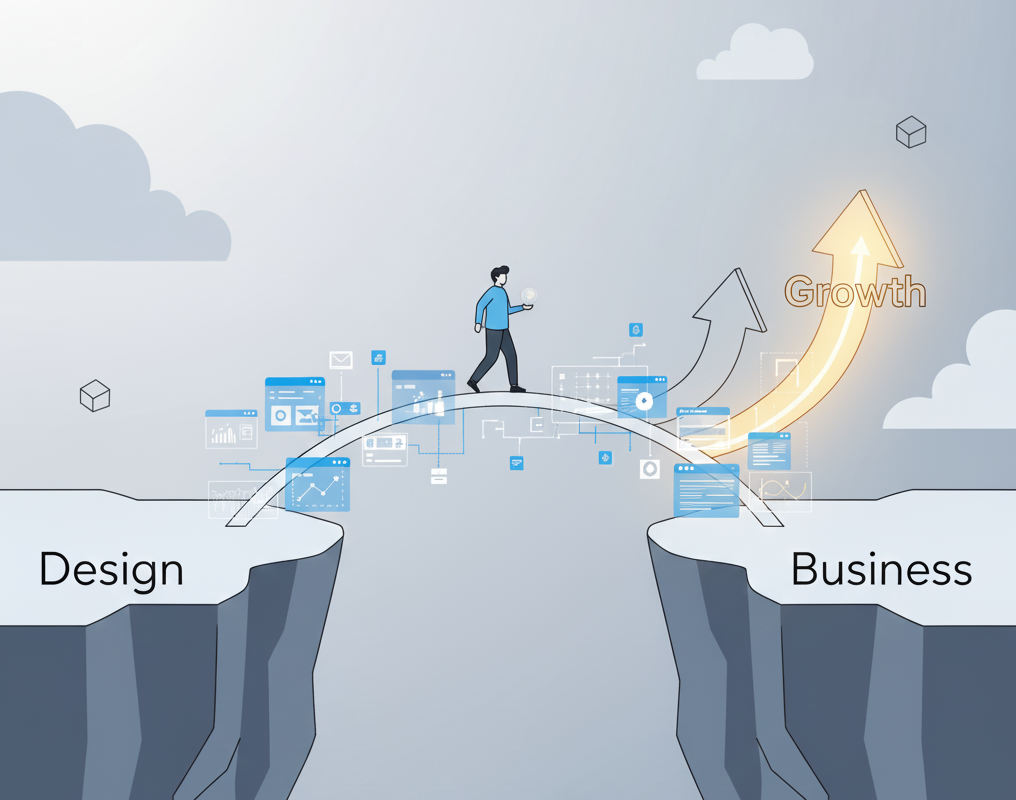
Connecting UX design decisions to business return on investment (ROI) is no longer a luxury; it is a vital strategy to build products that survive.
 AI-generated image
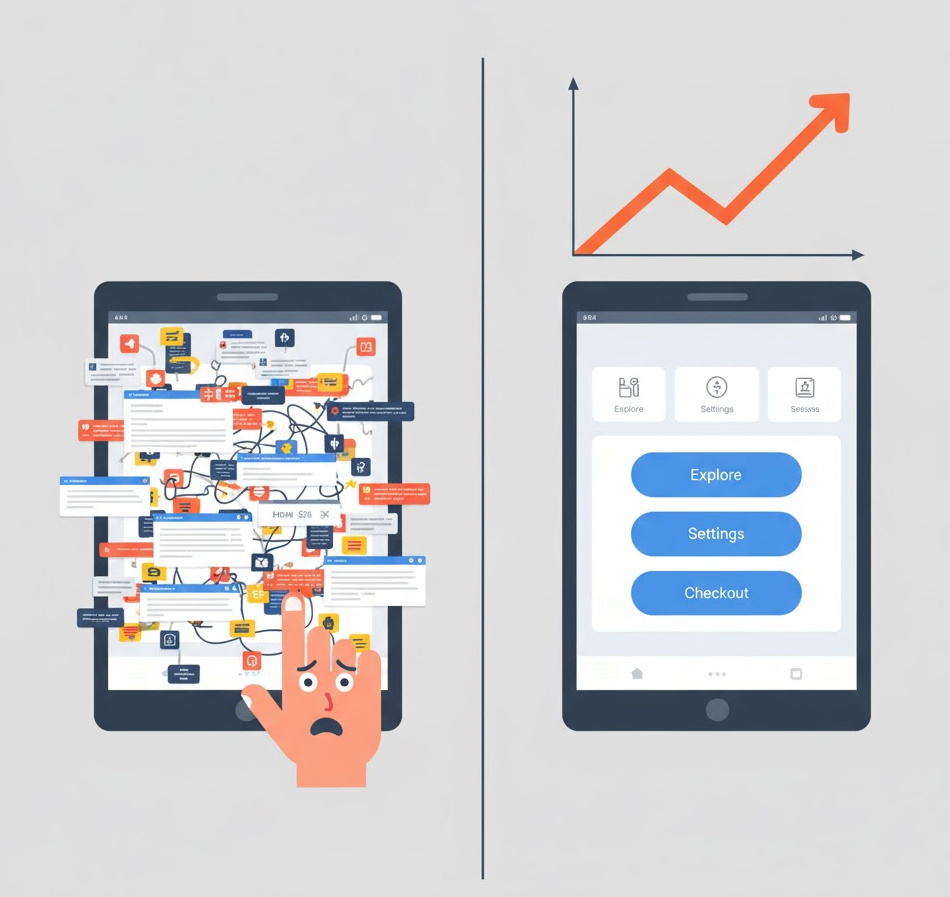
Think about the last time you left an app out of frustration. A confusing checkout process, a missing button, or too many steps. You probably didn't complain; you just closed the tab and moved on. Multiply that moment by a thousand users, and you can almost hear the silent sound of lost revenue.
This is why UX has outgrown its reputation as the "make it pretty" department. Great design doesn't just make users happy; it also keeps businesses alive. And in a world ruled by metrics and accountability, connecting UX decisions to ROI isn't a luxury; it is a must.
 AI-generated image
The digital era has brought in an unprecedented level of competition, where seamless experiences from industry leaders are constantly redefining user expectations. Companies are under immense pressure to deliver exceptional digital products and services, yet many struggle to secure adequate investment for UX efforts. Traditionally, the challenge for UX professionals has been articulating the impact of their work in terms that are understandable to business stakeholders, such as metrics like conversion rates, customer retention, and operational efficiency. When the financial contribution of UX cannot be clearly measured, UX work within the organization either falls to the bottom of the priority list or ceases to be proactive and turns into a (reactive) unit that focuses only on fixing existing bugs and problems.
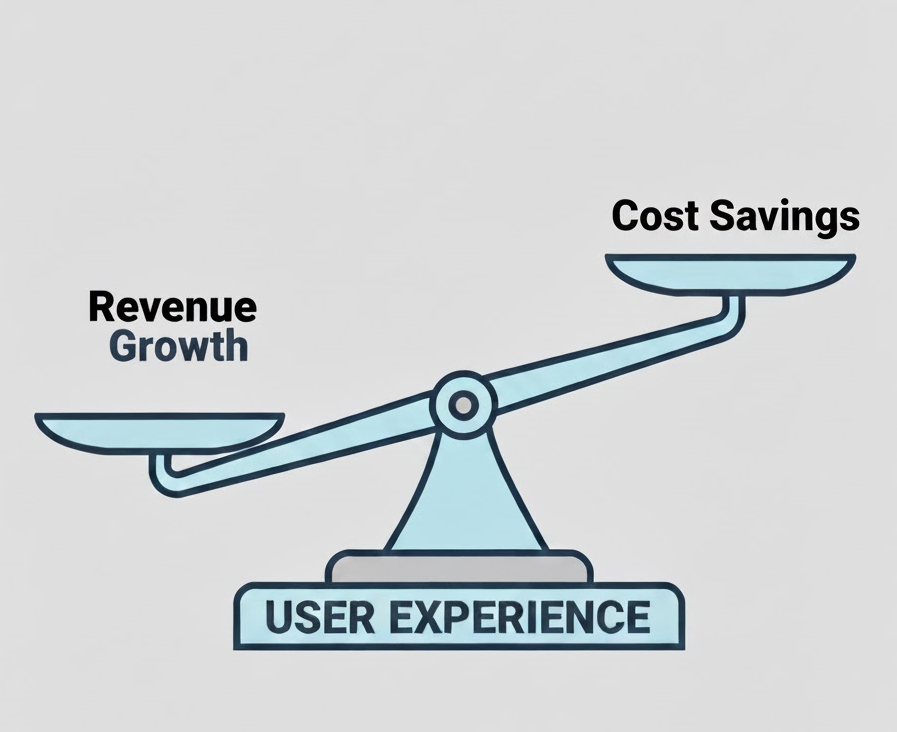
However, UX has a direct impact on revenue and cost savings.
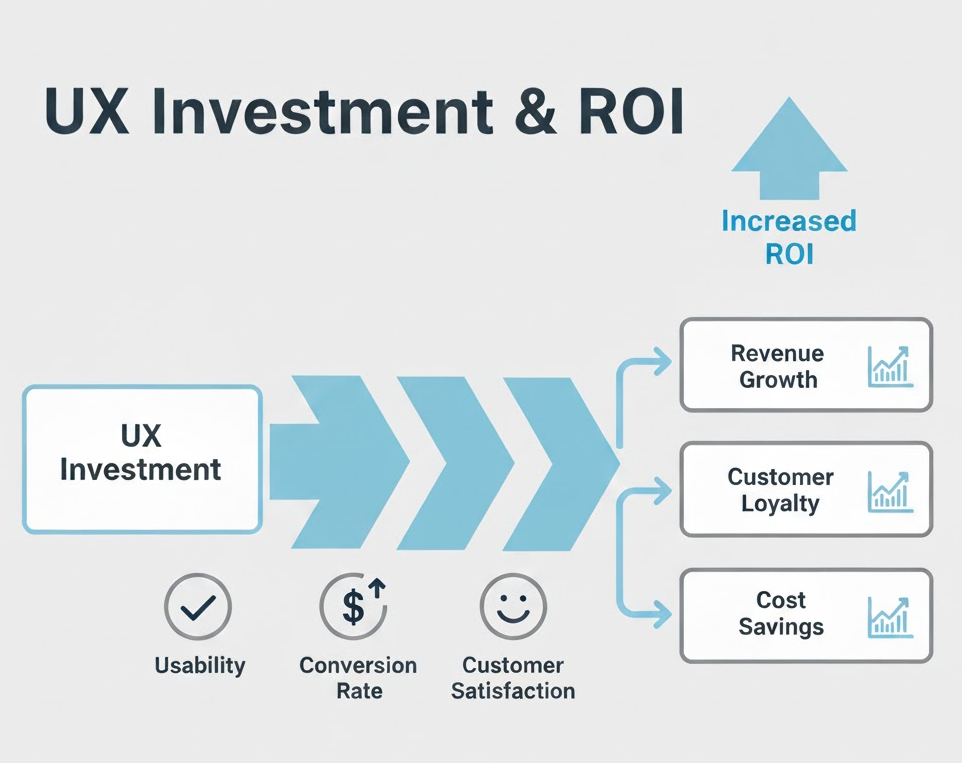
How? A well-designed user experience can significantly increase conversion rates, leading to increased sales and revenue. Research has shown that companies with strong design capabilities see higher revenue growth.
 AI-generated image
In addition to generating revenue, effective UX reduces customer support costs by minimizing user confusion and friction and reducing development iterations by catching usability issues early in the design process.
Improving usability increases the likelihood of users sticking with products that deliver a superior experience, increasing customer loyalty. So, customer lifetime value increases.
Some frequently cited data suggests that the return for every dollar invested in UX can be as high as $100, although this varies widely by industry and project.
 AI-generated image
Quantifying UX fosters cross-functional collaboration and strategic alignment.
When UX results are tied to measurable business objectives, they resonate across departments, from engineering and marketing to sales and executive management.
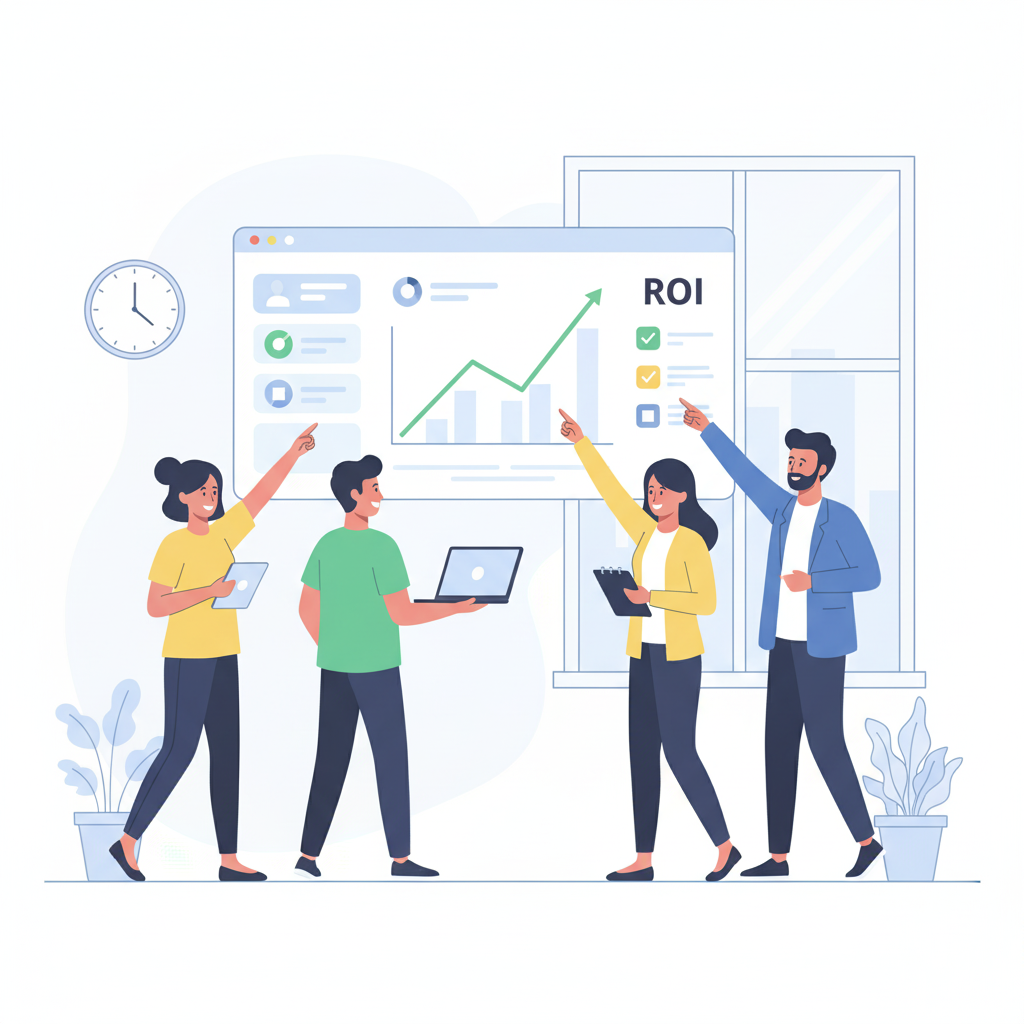
Instead of viewing UX as merely a visual detail, when we position it as an ROI tool, things change. This strategic perspective allows all managers and teams to see how user-focused design directly contributes to shared financial goals, and project objectives become clear. By demonstrating tangible impact, UX professionals can gain greater influence, secure more resources, and ensure that user needs are considered from the earliest stages of product development. This way, it's no longer an afterthought.
 AI-generated image
Data-driven UX leads to continuous improvement and innovation.
Measuring UX ROI isn't a one-time activity; it's an ongoing process that supports iterative design and continuous improvement. By tracking metrics like task completion rates, error rates, time on task, and customer satisfaction scores, teams can identify specific problems (pain points), validate design hypotheses, and prioritize future improvements based on potential business impact.
This systematic approach moves UX beyond subjective opinions into objective, evidence-based decision-making. Such continuous measurement allows organizations to innovate more effectively, adapt quickly to changing user needs, and maintain a competitive advantage by continuously optimizing the user journey for maximum business value.
Leveraging companies' experiences, both successful and unsuccessful, is crucial in guiding UX processes.
One of the most striking examples is Virgin America. When Virgin America wanted to redefine the flight experience digitally as well as in the air, they started with their website. They believed the booking process should not be a tedious and complex task, but a seamless experience that conveyed the brand's energy. With this vision, they collaborated with the agency Work & Co to redesign the user journey from scratch: unnecessary steps were eliminated, the information architecture was simplified, and a full-screen flow was created that worked seamlessly on mobile devices. Users could now book their flights with a few intuitive clicks, without having to navigate between pages. The design wasn't just visually appealing; it also brought the brand's promise of "making travel enjoyable" to the digital world. The results were impressive: mobile conversion rates tripled, support calls decreased, and the site was hailed as the new standard for user-centric digital experiences in the airline industry. This bold move by Virgin America proved that good design isn't just aesthetically pleasing; it can also be a powerful business strategy.
 AI-generated image
Another example is Mailchimp's onboarding workflow. Mailchimp, a leading email marketing platform, implemented a significant UX overhaul of its onboarding process to make it simpler and more engaging for new users. Recognizing that a complex initial experience can lead to high drop-off rates, they focused on minimizing steps, providing clear guidance, and delivering immediate value. Through iterative design and continuous user testing, they made the onboarding process more intuitive. This improved user experience led to a significant increase in user activation and retention rates, as more new users completed the setup and began using the platform's core features. This strategic UX investment has directly translated into a larger active user base and, consequently, higher subscription revenue. Their success is a testament to the profound impact targeted UX improvements can have on key business growth metrics.
 AI-generated image
In Summary
It's safe to say the era of estimating the value of user experience is over. For UX professionals to truly become strategic partners, a fundamental shift is required: embracing return on investment (ROI) as the fundamental language of their craft. By actively measuring and communicating the financial impact of their work — whether through increased conversions, reduced support costs, or improved customer loyalty — designers can elevate their discipline from a service function to a vital business driver. This requires developing business acumen alongside design skills, understanding key performance indicators, and leveraging analytics to demonstrate the tangible value of every pixel and interaction. This means pairing creativity with business literacy, mastering KPIs, and turning data into design insight.
 AI-generated image
Start integrating ROI into every stage of the UX process, from initial research to post-launch optimization, and let's transform "good design" into "good business."